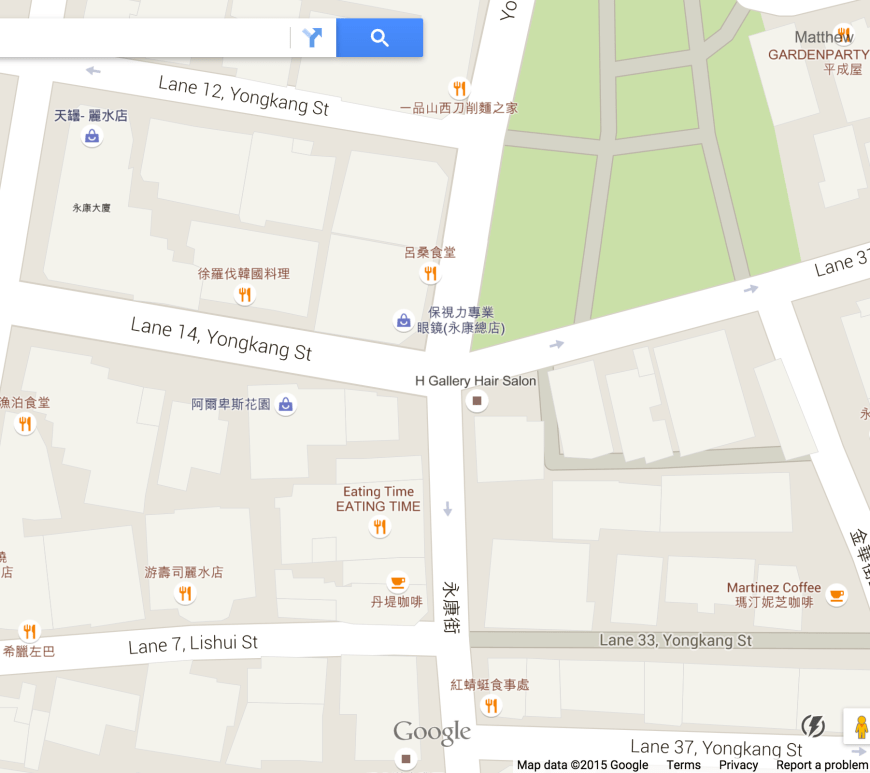
Cityscape: Taipei – West of Taipower Station

First of all, why “west of Taipower station” instead of “around Taipower station”?  The answer reveals a key difference between stations in Taiwan (and perhaps most of the world) and stations in Japan. In a word, Taipower station is a means, not an end.  It’s a way to get from A to B, not a destination in and of itself.  The station is not a … Continue reading Cityscape: Taipei – West of Taipower Station

Quick View – Denen Chofu 田園調布

Denen Chofu is a planned development located 16 minutes south west of Shibuya Station (on Tokyu train -東急東横線).  It is said to be inspired by “garden city” developments such as those around London.  However, the urban structure of the neighborhood seems basically similar to modern Tokyo, with the notable irregularity that the number of shops and businesses is much lower. South East Denen Chofu . . . … Continue reading Quick View – Denen Chofu 田園調布

Roppongi Hills – 洋風 or 和風?

Have you ever heard somebody confuse the words “modern” and “western”?  It’s a very unsettling experience.  Perhaps because it seems to come not from any maliciousness or intentionality  per se, but from a deeply subconscious assumption that anything cutting edge must be western in origin. Deconstructing the Discourse of Westernization Superficially, the steel and glass structure of Mori Tower contrasts with the wooden construction techniques of traditional … Continue reading Roppongi Hills – 洋風 or 和風?

Taipei Map Analysis: Dongmen Station

Here I compare four overlapping areas around Dongmen (東門) Station.  They are not distinct neighborhoods, just convenient rectangular areas.  The question is: which area is most interesting to walk in, north-west from the station, north-east, south-east, or south-west. Here are the four areas shown at the 200 ft scale on Google Maps: . . . . Short Block Index Direction from Dongmen Station :: Short … Continue reading Taipei Map Analysis: Dongmen Station

Taipei Photo Tour: Huaxi Street Night Market aka Snake Alley, a covered shopping arcade in Wanhua

If you visit Lungshan Temple on a hot summer day, you can cool off in the shade of a nearby covered arcade called Snake Alley (aka Huaxi Street Night Market).  The shortest path is along Guangzhou Street, but that is a busy street where pedestrians share the road with cars and motorcycles.  Instead, take a two min stroll through Sanshui Street: The entrance to Sanshui Street is … Continue reading Taipei Photo Tour: Huaxi Street Night Market aka Snake Alley, a covered shopping arcade in Wanhua

Cityscape: Wenzhou Street, Da’an, Taipei

Taipei’s Da’an district is one of the most densely populated areas in the world, with over 70,000 people per square mile.  Da’an district also includes Da’an Forest Park, National Taiwan University, and unpopulated areas to the south and south-east of NTU.  The areas shown here are probably over 100,000 people per square mile. Standing at the intersection where lanes 56 and 58 meet at Wenzhou street, and … Continue reading Cityscape: Wenzhou Street, Da’an, Taipei

Condition 2: Short Blocks – Creating an Index

“Most blocks must be short; that is, streets and opportunities to turn corners must be frequent.” -The Death and Life of Great American Cities; Chapter 9, “The need for small blocks”. It’s a little bit tricky to define precisely what it means for a block to be short.  It appears that Jacobs’s intended metric is not so much the actual size of blocks, as the … Continue reading Condition 2: Short Blocks – Creating an Index

In Tokyo, the Pedestrian is King

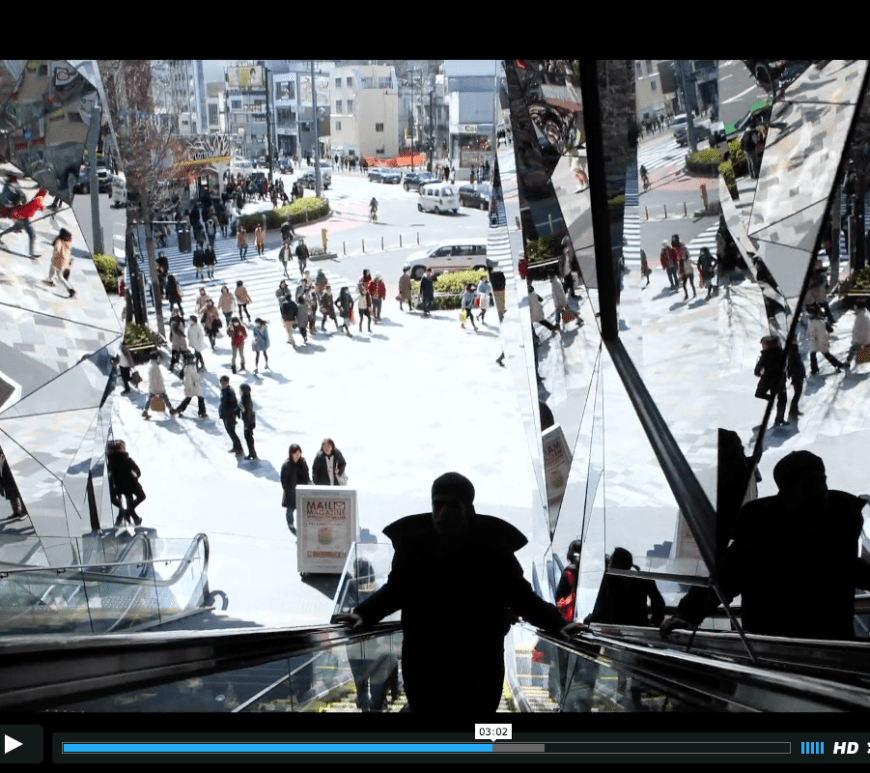
[Lessons on Japanese Urbanism from French Slow TV] At 0:27  Note the very well marked scramble crossing (c.f. the arrogance of space). Lesson 1: zebra stripes can never be too wide. From 1:00 to 1:59  Note the total absence of vehicular traffic.  The numerous parked cars and bikes make clear that this is not a depopulated area. Lesson 2: its possible to build an urban street … Continue reading In Tokyo, the Pedestrian is King