

Sasebo – 佐世保
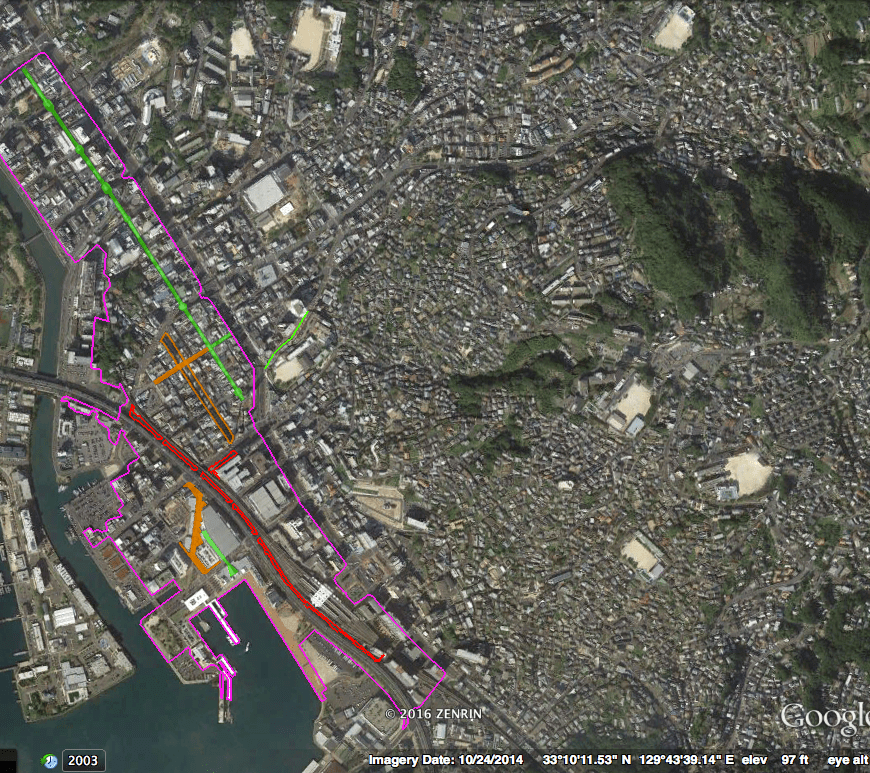
Sasebo is a small city with a vibrant commercial core. Most stores and businesses are within a couple blocks of the 20 minute walk shown below: The main commercial area is unified by a continuously roofed arcade (全蓋アーケード) fully three fifths of a mile in length. It is managed by two Shotengai Associations. Sankacho (aka Sun Plaza) in the NW half: Yonkacho in the SE half: The following diagram … Continue reading Sasebo – 佐世保

Hierarchy of Japanese Streets – Sorakuen Garden (相楽園)
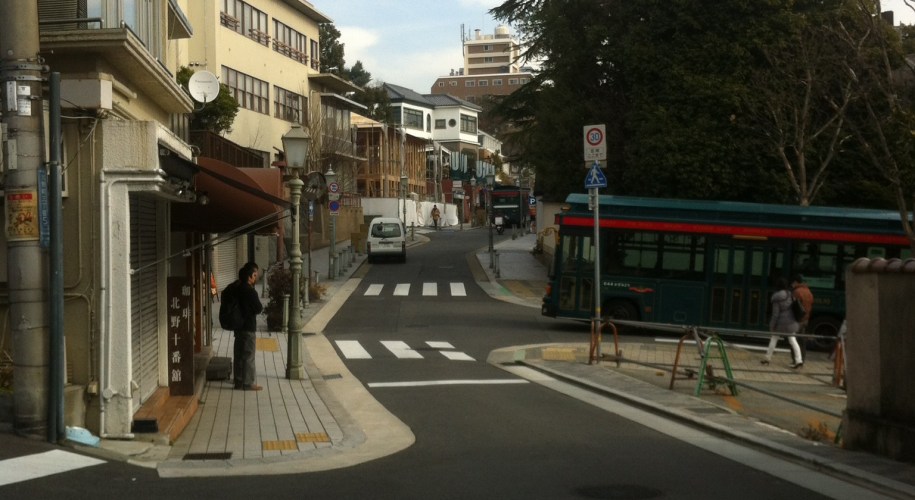
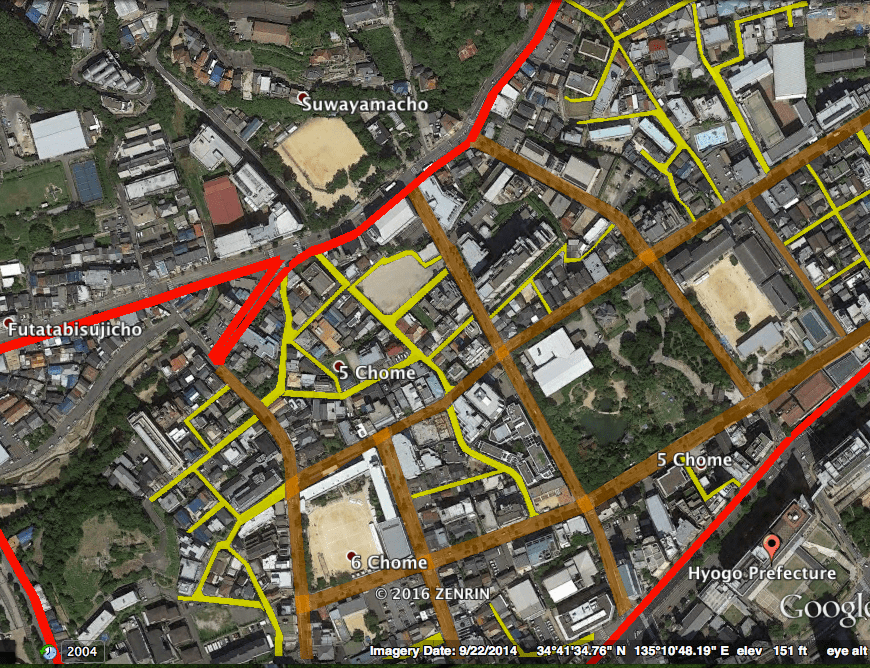
The area southwest of Kitano-cho (the western halves of 中山手通 & 山本通) is notable for hosting many educational institutions: St Michael Nursery, Kobe Kakyo Kindergarten, Kobe Elementary School, Shinko High School, Kobe Chinese School, and Kobe Yamate University. How safe are the streets for students walking to school? As described previously, streets in Japan can be analysed hierarchically, and classified on a five rank scale. The streets in this area occupy only … Continue reading Hierarchy of Japanese Streets – Sorakuen Garden (相楽園)
Hierarchy of Japanese Streets – Illustrated
Pedestrian movement paths in Japanese cities can be decomposed hierarchically, proceeding from the narrowest residential laneways to the busiest shopping streets (near rail stations). – As described previously, the highest levels of the pedestrian hierarchy are completely separate from the vehicular network. – The following illustration shows the structure of these streets near Sannomiya station dark green: subway tunnels light green: shopping arcades blue: nightlife alleys peach: … Continue reading Hierarchy of Japanese Streets – Illustrated
Hierarchy of Japanese Streets
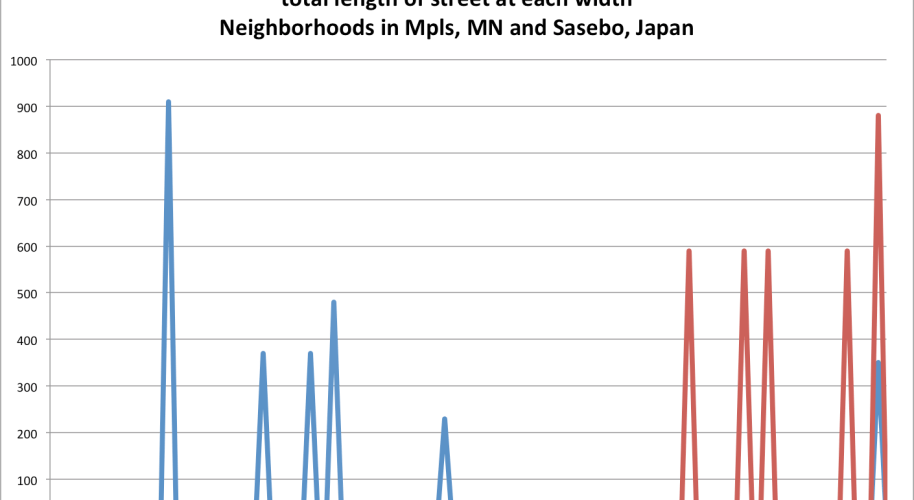
The transportation structure of Japanese cities can be decomposed into pedestrian and vehicular networks. In some places they run side-by-side, in other places they overlap (woonerf), but for the most part, they are completely separate. Both of these networks are hierarchical in form: Hierarchy of Driving 1. Woonerfs – slow and very narrow streets where people and cars mix. 2. Narrow Streets – streets just wide enough for a … Continue reading Hierarchy of Japanese Streets
Stations and Shotengai: Backbones of Walkability
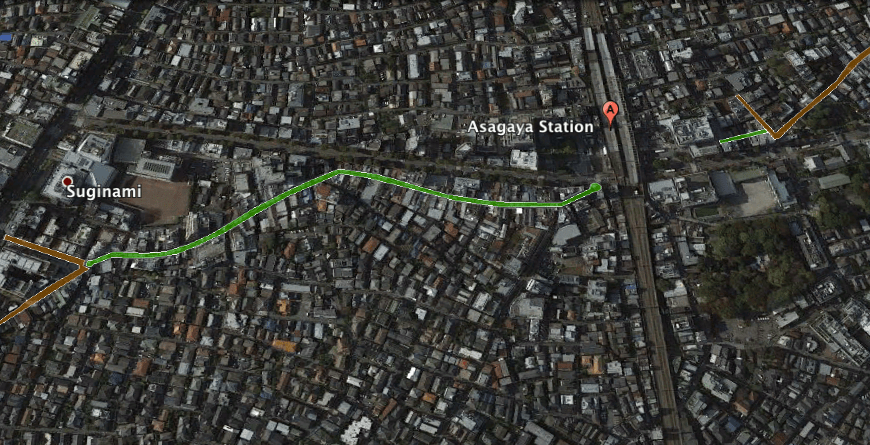
Japanese train stations support the growth of walkable commercial nodes. Continue reading Stations and Shotengai: Backbones of Walkability
Road Diet in Kobe: Fukiai-Minami (葺合南)
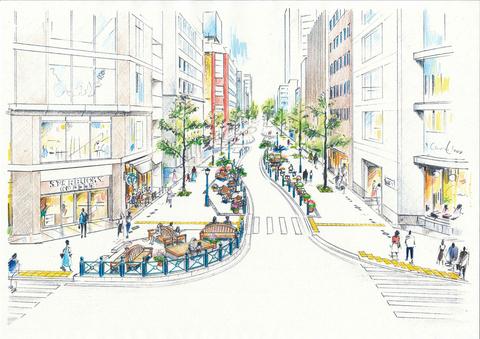
The city of Kobe is currently moving forward with major street improvements which will culminate in the total pedestrianization of downtown’s Sannomiya area (a major commuter rail hub with no less than six stations). This will greatly enhance the overall appeal of central Kobe, and could be a real game changer for international tourism. The following is a rough translation of this press release, which describes … Continue reading Road Diet in Kobe: Fukiai-Minami (葺合南)
Maps are for People, Addresses are for Cars
If you want people to visit you, don’t give them your address; give them a map. Addresses are for people going directly from point A to point B, without doing anything useful on the way: no side-errands, no socializing, no stopping to enjoy food or drink. Maps are for people for whom physical space has meaning; if something interesting lies between their point of origin and their … Continue reading Maps are for People, Addresses are for Cars
デッキ論: deck levels vs pedestrian overpasses
What is the difference between a deck level (デッキ) and a pedestrian overpass (歩道橋)? How can we classify the pedestrian infrastructure at JR Ueno Station, pictured above? The common characteristic: grade separation of motor vehicles and pedestrians. I propose that deck levels have one primary characteristic which distinguishes them from pedestrian overpasses: direct connectivity to adjacent buildings. In pedestrian overpasses, on the other hand, the connectivity is broken … Continue reading デッキ論: deck levels vs pedestrian overpasses
#SuperFlat: Smooth Sidewalks and Vulnerable Populations
For the first time in history, there are many people in the “oldest old” category, and this population continues to grow. These very old people can be considered the “new humans,” recent newcomers in the history of mankind. -Sachiko Kamiyama, The Super Aged Society A lot of factors go into creating a good pedestrian experience. Many of them are visible and obvious: shade trees, wide sidewalks, narrow roads. … Continue reading #SuperFlat: Smooth Sidewalks and Vulnerable Populations
Kobe High Line 神戸の臨港線
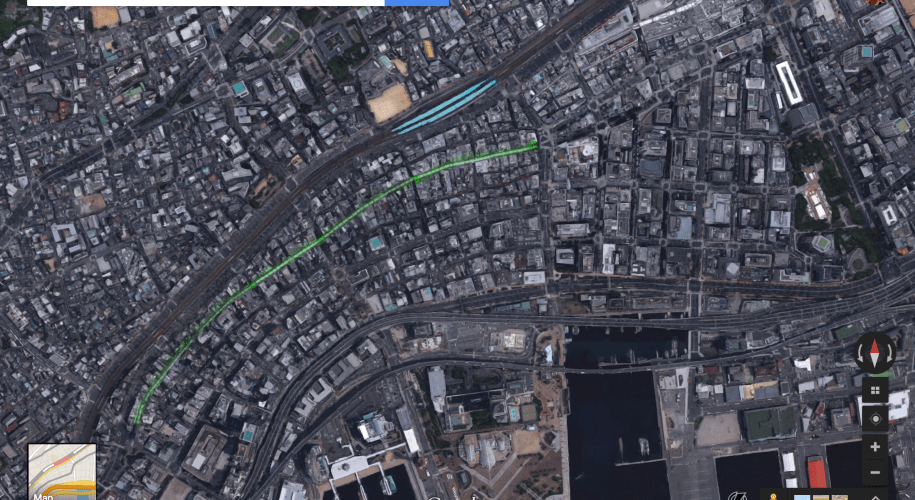
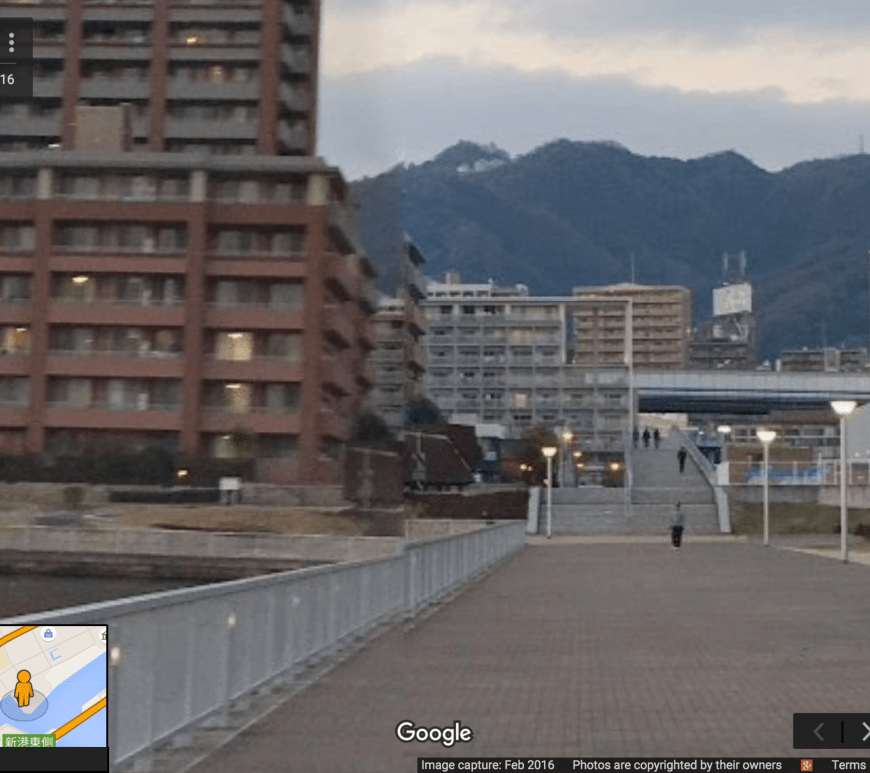
The backbone of the Kobe High Line* is an old elevated railroad track (the Harbor Line / 臨港線), now converted into a pedestrian promenade. It has been expanded with a new pedestrian overpass (歩道橋) that connects it directly to the Kobe Waterfront and Hanshin Kasuganomichi Station (阪神春日野道駅). The aerial view below shows covered arcades in green, pedestrian bridges and elevated promenades in yellow, and rail stations in … Continue reading Kobe High Line 神戸の臨港線
 janejacobsjapan